 Diamond Cool
← Back to Site
Diamond Cool
← Back to Site
Diamond Cool
The only sub-ambient, zero-water, PFAS-free cooling platform engineered for the 155 kW AI rack era.
Heat Is Leaking Money Out of Every Chip
At advanced nodes (4nm–5nm), electron tunneling through gate oxide creates a parasitic current that never stops — even when idle. Every 10°C rise doubles the leak. At 1,400W per GPU, this is the #1 threat to AI economics.
by Static Leakage at Advanced Nodes
+10°C (Arrhenius-Boltzmann Law)
Doubles Per +10°C Rise
Data Center Downtime
⚡ The Leakage Tax
At sub-5nm FinFET nodes, subthreshold leakage and gate oxide tunneling create a constant parasitic drain. A 1,400W GPU can waste 280–560W as heat from leakage alone — watts that produce zero compute.
🔥 The Throttle Trap
NVIDIA GPUs throttle when junction temperature hits 83–95°C, force-reducing clock speed and voltage. At rack scale (72 GPUs × $40K each), thermal throttling strands $864K+ of compute capital.
💀 The Death Spiral
More heat → more leakage → more heat. Under sustained thermal stress, chip lifespan drops from 5 years to 1–3 years. Electromigration and gate oxide degradation accelerate exponentially.
Only Sub-Ambient Kills the Leak
Today's liquid cooling lowers temperature — but keeps GPUs well above ambient. Diamond Cool's cryogenic platform pushes junction temps below 0°C, where leakage current drops by orders of magnitude.
| Metric | Liquid Cooling (Water / CDU) | Diamond Cool (Cryogenic) |
|---|---|---|
| GPU Junction Temp | 45–70°C | -10°C to -20°C |
| Static Leakage Power | 20–30% of Thermal Design Power | <2% of Thermal Design Power |
| Leakage Reduction vs. Liquid | Baseline | 50–250× vs. liquid cooling |
| Thermal Throttling Risk | Rare (<5% perf loss) | Impossible (–40°C headroom) |
| Chip Lifespan (Arrhenius) | 3–5 years | 7–10+ years (projected) |
| PUE (Cooling Efficiency) | 1.15–1.25 | 1.03–1.05 |
| Water Consumption | 0.5–1.2 L/kWh | 0 L/kWh (closed N₂ loop) |
| PFAS / Toxic Fluids | Required (many systems) | Zero — silica dielectric |
Cryogenic Temps (7nm FinFET)
at 200K vs. 300K (14nm)
Cryo (Same Performance)
Sources: CoolIT/CastleRock Digital (liquid temps), IEEE Computer Society (cryo leakage), TU Munich (5nm FinFET study), Google/ASHRAE (PUE benchmarks)
$5.5B Today. $38B by 2033.
The data center liquid cooling market is growing at 18–31% CAGR. Hyperscalers are deploying $600B+ in AI infrastructure CapEx in 2026 alone.
Sources: GlobeNewswire, GM Insights, Futurum Group, IDC — See Works Cited [5]–[14]
Exits Prove the Category
Major cooling companies are being acquired at massive valuations — and none of them offer sub-ambient, zero-water, or closed-loop cryogenic architecture.
| Company | Event | Valuation | Key Metric |
|---|---|---|---|
| CoolIT Systems | Acquired by Ecolab (Mar 2026) | $4.75 Billion | ~$550M NTM revenue, 29× EBITDA |
| JetCool | Acquired by Flex (Nov 2024) | Undisclosed | $17M Series A (Bosch Ventures) |
| Accelsius | Series B (Jan 2026) | $89M Total Raised | $65M round — Johnson Controls + Legrand |
Sources: Ecolab, BusinessWire, Innventure, JetCool — See Works Cited [15]–[18]
Closed-Loop Cryogenic Cooling
Four proprietary subsystems working together to deliver what no other company can: sub-ambient cooling at commercial scale.
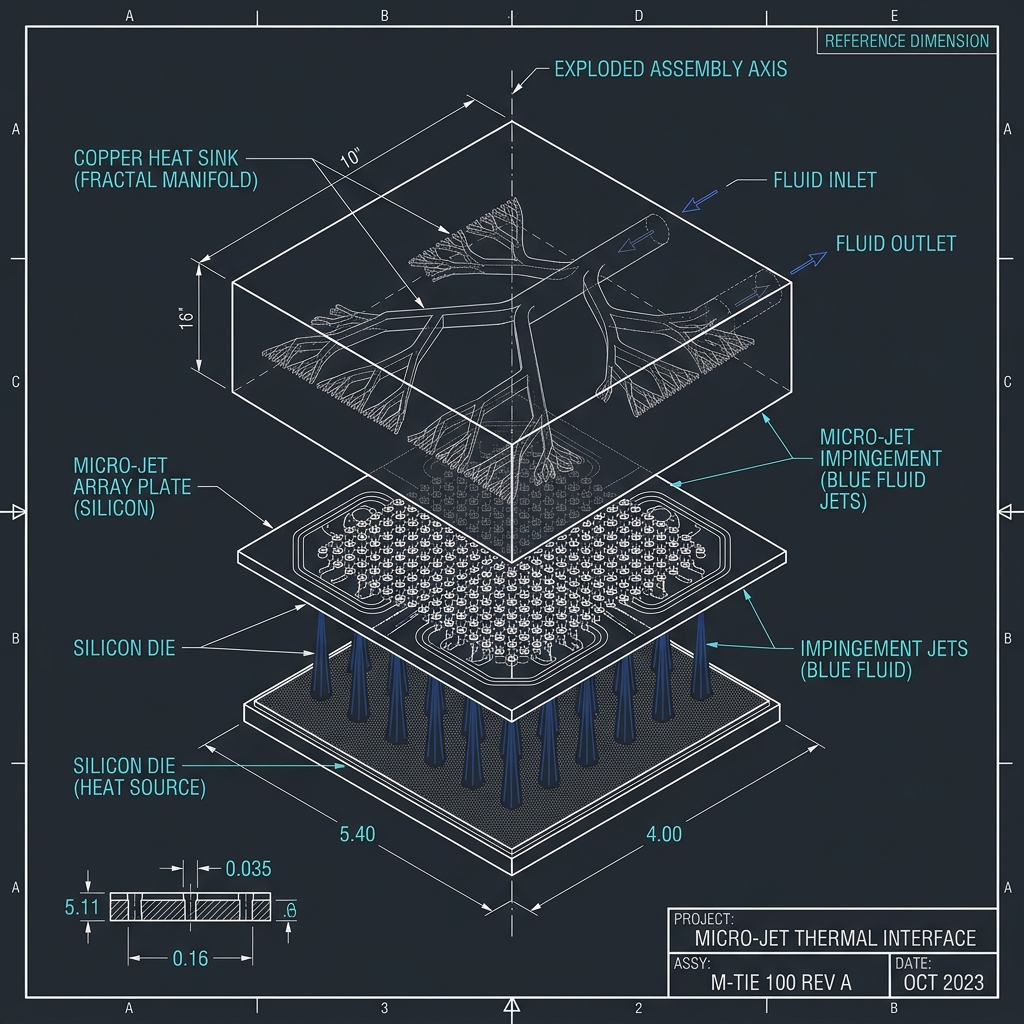
1. Silica Dielectric Cold Plates
PFAS-free, non-conductive nanofluid on all 72 GPUs, 36 CPUs, and 18 NVSwitch ASICs. Zero water. Zero shorting risk.
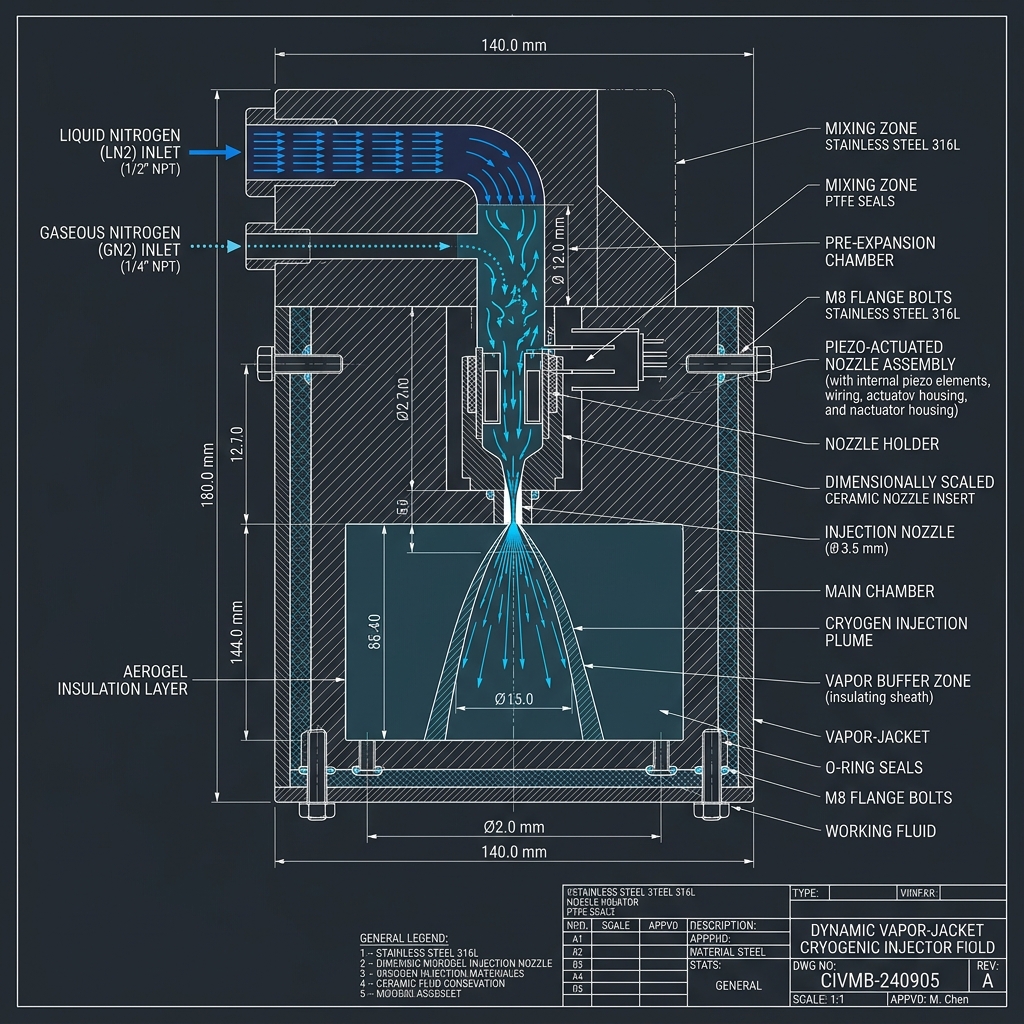
2. LN₂ Cryogenic Injection
Secondary loop sub-cools silica fluid via dedicated heat exchanger. Achieves -10°C to -20°C at chip junction. Impossible with water.
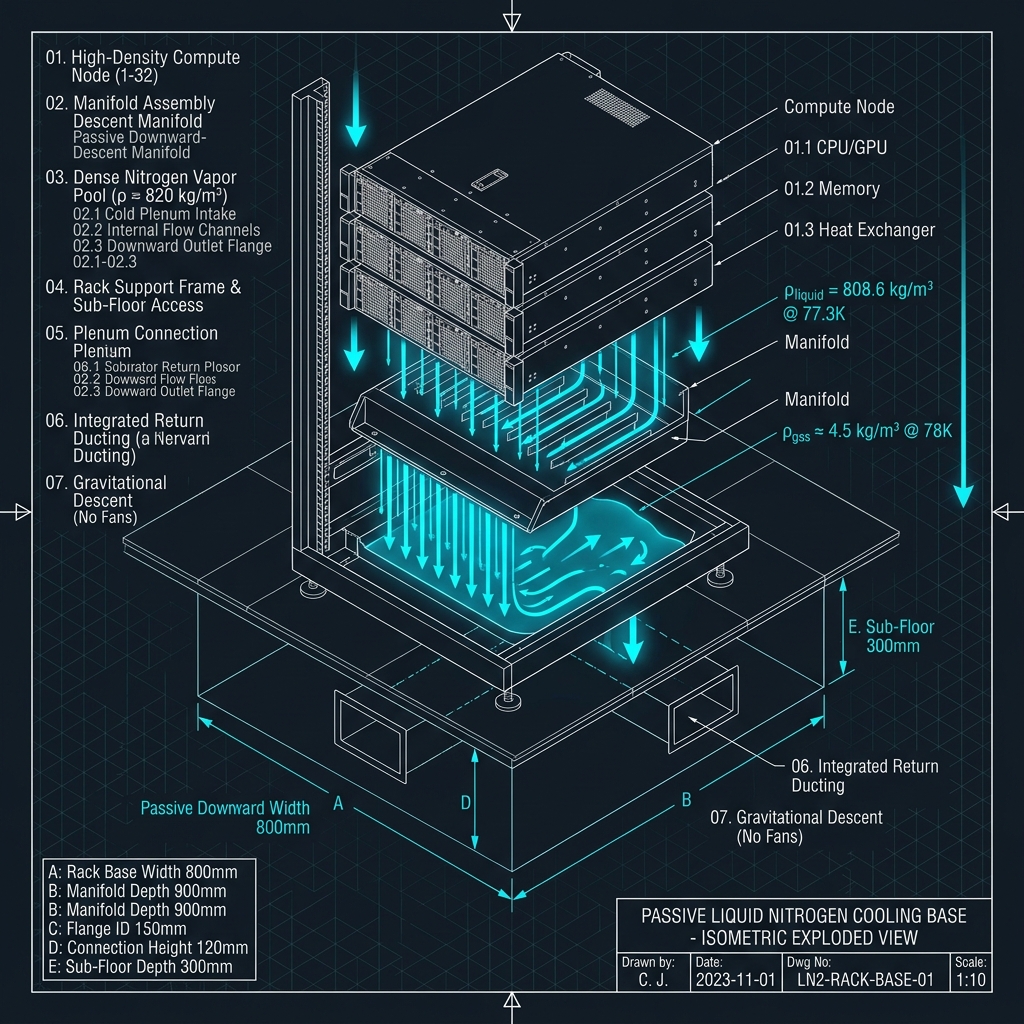
3. Direct-Siphon Recovery
Captures exhaust N₂ gas and feeds it back to the liquefier intake. Reduces ongoing energy consumption by up to 60%.
The Direct-Siphon Recovery Loop
How It Works
- System uses a standard nitrogen liquefier to produce LN₂ from atmospheric air
- LN₂ cools the silica dielectric fluid, absorbing heat from GPU cold plates
- Warm nitrogen gas is captured — not vented — by the direct-siphon manifold
- Recovered gas routes back to liquefier intake as nearly pure N₂
- Liquefier spends far less energy on re-separation and re-compression
Result
This transforms cryogenic cooling from a prohibitively expensive open-loop process into a commercially viable, hyperscale-ready platform.
OpEx Savings: $75K–$115K/rack/year
| Cost Category | Industry Standard | Diamond Cool | Annual Savings |
|---|---|---|---|
| Cooling Electricity | $80K–$120K (PUE 1.35–1.80) | $15K–$25K (PUE 1.03–1.05) | $65K–$95K |
| Water Consumption | 1.8L/kWh (evaporative) | 0 L/kWh (closed N₂ loop) | 100% eliminated |
| HVAC Maintenance | $8K–$15K | $0 (no facility HVAC) | $8K–$15K |
| Hardware Lifespan | Standard lifecycle | 25–40% extended | Significant |
The Only
Zero Water Waste
Solution
Every competitor uses water. Diamond Cool uses zero. Our closed-loop cryogenic system eliminates water consumption entirely — no evaporative cooling, no water treatment, no municipal water dependency.
The Only Complete Solution
| Company | Technology | Sub-Ambient | PFAS-Free | Zero Water | Closed-Loop Cryo |
|---|---|---|---|---|---|
| CoolIT ($4.75B) | Water cold plates | ✗ | ✗ | ✗ | ✗ |
| Vertiv | CDUs, rear-door HX | ✗ | Mixed | ✗ | ✗ |
| Accelsius ($89M) | 2-phase immersion | ✗ | ✗ PFAS | ✗ | ✗ |
| JetCool (Flex) | Microjet impingement | ✗ | ✗ | ✗ | ✗ |
| Diamond Cool | Cryo-silica direct-siphon | ✓ -20°C | ✓ | ✓ | ✓ |
7 Utility Patents Filed
Full-stack IP protection covering every layer of the cooling architecture — from silicon interface to facility enclosure.
| # | Title | Strategic Value |
|---|---|---|
| 01 | Multi-Layer Impingement Cold Plate | Core hardware — direct GPU silicon interfacing |
| 02 | Closed-Loop Cryogenic Injection | Direct-siphon architecture — primary IP moat |
| 03 | Cascaded Sub-Ambient Management | Multi-stage cooling cascade for extreme density |
| 04 | Gravitational Exhaust Routing | Condensation-free sub-ambient operation |
| 05 | Thermal Propagation Barrier | Fire suppression and thermal runaway prevention |
| 06 | Modular Zoning Architecture | 3-zone segregated enclosure design |
| 07 | Refrigerant-Grade Sub-Ambient CDU | Rack-level refrigeration to -15°C |
Strategic portfolio value: $10M–$18M (internal valuation analysis)
Three Revenue Streams
Hardware Sales
UL-2755 certified modular sidecar CDU. Plugs into existing racks — zero facility redesign. 8-week deployment. Per-rack BOM: $77K–$99K.
Thermal Consulting
Cryogenic cooling design, sub-ambient retrofit architecture, PUE optimization. $250–$500/hr specialist rates. Begins Day 1 — converts to hardware sales.
IP Licensing & OEM
License patented cold plate designs and nitrogen recovery logic to thermal OEMs (Vertiv, Supermicro, Dell). Pure royalty revenue stream.
“About 15 years ago, I began building supercritical CO₂ extraction equipment. Through mastering the engineering prowess required to design, manufacture, and operate sub-zero, high-pressure systems exceeding 200 psi, I gained a solid reputation of being someone who can deliver. The technology we've developed at Diamond Cool is far less hazardous and less complex than those systems. When we evaluated inefficiencies in liquid-cooled NVIDIA GB300 infrastructure, the opportunity to significantly improve the performance of AI infrastructure was clear. Based on my engineering and manufacturing experience building complex supercritical systems, I can say confidently that we have the expertise to successfully bring this product to market.”
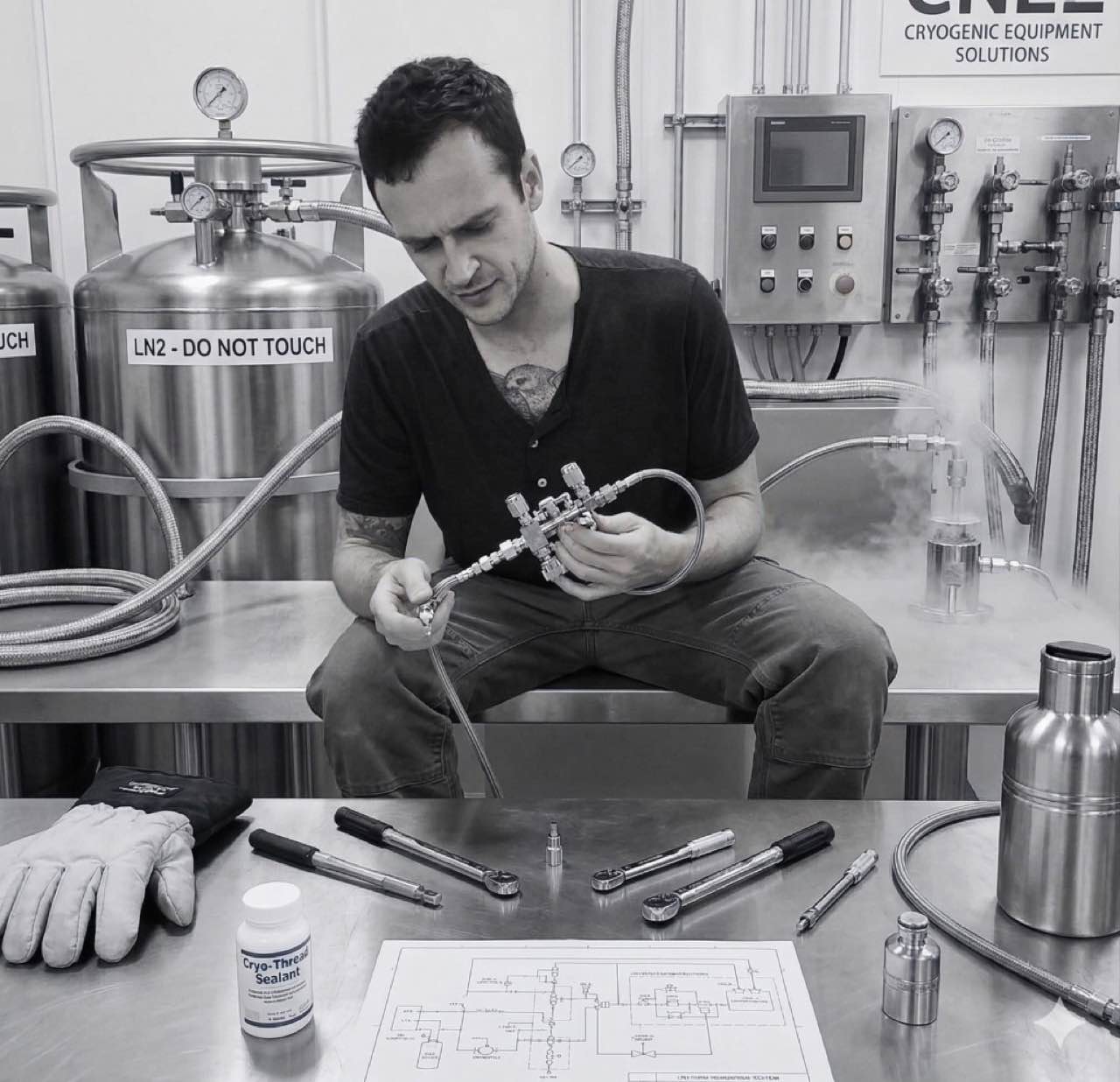
Built by Engineers
15+ years engineering supercritical CO₂ systems at 300+ bar. Bridges thermodynamic theory with deployable, continuous-duty machinery. Expert in high-pressure fluid control, precision CNC manufacturing, and zero-downtime industrial design.
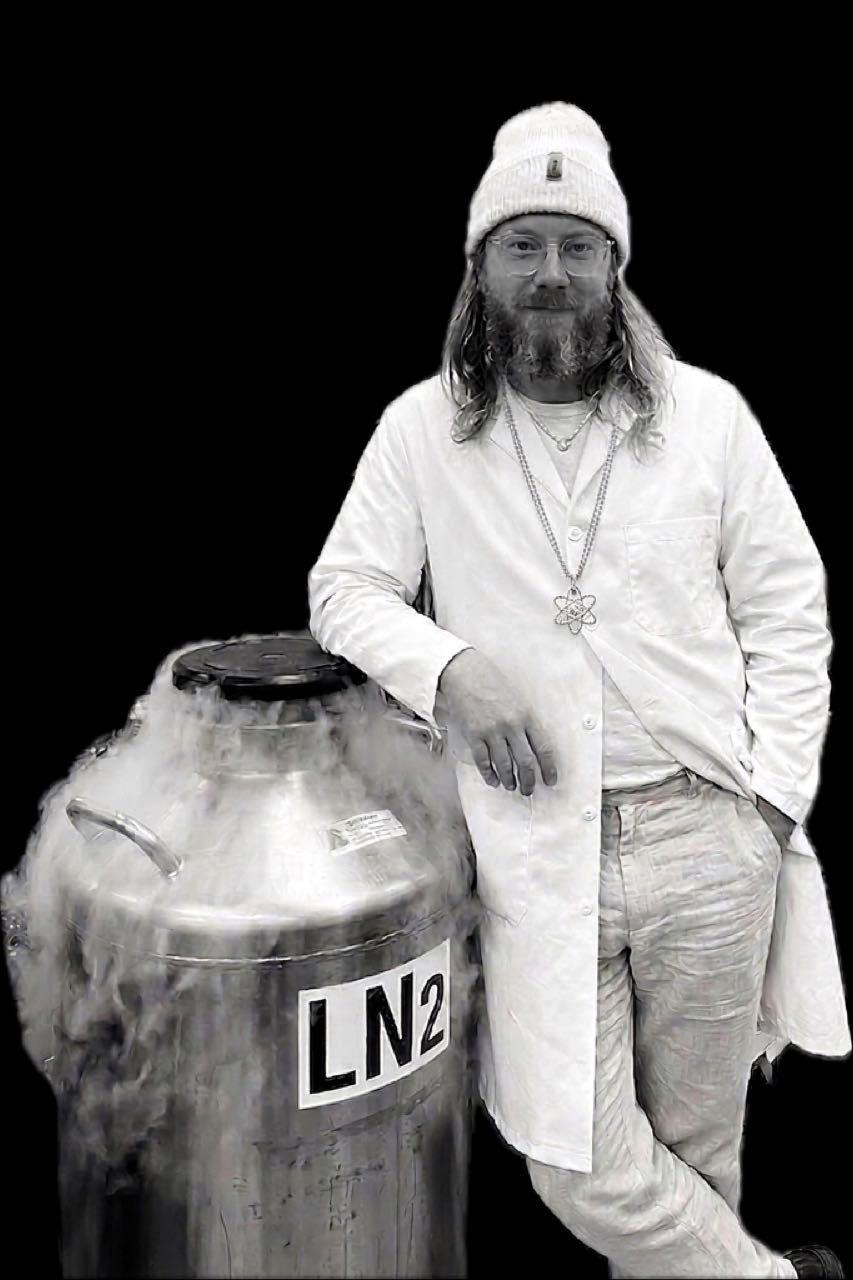
Serial entrepreneur. Founder of Quantum Light Technology (photonic quantum computing) and Gondor Data Security. 20+ years systems-level execution across advanced computation, cryptographic security, and infrastructure architecture. 20+ patents authored.
Where We Are Now
Diamond Cool is currently in the Prototype & Testing phase. The next 6–12 months are designed to validate performance, achieve certification, and position for first hardware revenue.
| Phase | Timeline | Milestone | Status |
|---|---|---|---|
| 1. Patent Filing | Completed | 7 utility patents filed covering full cooling architecture | ✓ Done |
| 2. Prototype & Testing | Now → Month 4 | Single-rack cold plate fabrication, silica fluid loop validation, LN₂ heat exchanger bench testing, direct-siphon manifold proof-of-concept | ◆ In Progress |
| 3. Pilot Deployment | Month 4 → 8 | Full single-rack pilot at partner lab. Measure PUE, validate sub-ambient temps (-10°C to -20°C), stress test 155 kW thermal load | Upcoming |
| 4. UL-2755 Certification | Month 6 → 10 | Submit modular sidecar CDU for UL safety certification. REACH & RoHS environmental compliance. | Upcoming |
| 5. Manufacturing Ramp | Month 8 → 12 | Partner with BDE Manufacturing (Portland) for CNC cold plates. Medford Fabrication for enclosures. Build first 5 production units. | Upcoming |
| 6. First Hardware Revenue | Month 10 → 14 | Deploy certified sidecar CDU to enterprise & colo customers. First hardware sales + consulting retainers. | Target |
Two Paths to Scale
Diamond Cool is structured to accept capital at multiple levels — from A-Round venture capital through B-Round institutional growth equity positioning for IPO.
Path A — A-Round
Raising $10M to fund prototype development, pilot deployment, UL certification, and initial market entry. 18-month runway to revenue-generating operations.
Path B — B-Round
$200M–$1B raised for data center acquisition, purchasing additive manufacturing to meet growing market demand, and helping pass legislation to require the use of Diamond Cool — the only technology that removes the need for water.
A-Round Use of Funds: R&D & Prototyping $2.5M–$3M · Cryo Equipment & Manufacturing $1.5M–$2M · Engineering Team $2M–$2.5M · UL Certification & Compliance $500K–$750K · Pilot Deployments $1M–$1.5M · Operations & Reserve $1M–$1.5M
The Road to Public Markets
For institutional investors with $1B+ check-writing capability, Diamond Cool offers a clear path to public listing — modeled on Vertiv's $5.3B SPAC and the 20–26× EV/EBITDA multiples commanding the data center infrastructure sector.
| Phase | Timeline | Milestone |
|---|---|---|
| 1. B-Round | Year 1–2 | $200M–$1B institutional round: • Data center acquisition & deployment • Additive manufacturing to meet growing market demand • Legislation to require Diamond Cool — the only waterless cooling technology |
| 2. Revenue Scale | Year 2–3 | Reach $50M–$100M ARR. Deploy to 3+ hyperscaler campuses. Achieve 35%+ gross margin at scale. |
| 3. IPO Readiness | Year 2–3 | PCAOB audit. SOX compliance. Independent board (Audit, Comp, Gov committees). IR team hire. S-1 drafting. |
| 4. SEC Filing | Year 3 | Confidential S-1 submission. 12–14 week SEC review cycle. Address comment letters. Public filing. |
| 5. Roadshow | Year 3 | 2-week institutional roadshow. Book-building with Goldman Sachs, Morgan Stanley, JP Morgan tier banks. |
| 6. Pricing & Listing | Year 3–4 | NYSE/NASDAQ listing. Target 20–26× EV/EBITDA (sector median). Float 10–15% of shares outstanding. |
| 7. Public Company | Year 4+ | Access to public capital markets. Secondary offerings for facility expansion. M&A via stock currency. |
$750B CapEx. Mandatory Liquid Cooling.
Every GB300 NVL72 rack (135–155 kW) requires liquid cooling. Hyperscaler CapEx reaches $750B in 2026. CoolIT's $4.75B acquisition proves sector multiples at scale.
Path to $27B Revenue
| Year | Share | New Racks | Revenue | EBITDA |
|---|---|---|---|---|
| 2027 | 10% | 7,000 | $2.5B | $530M |
| 2028 | 12% | 9,600 | $4.7B | $980M |
| 2029 | 15% | 15,000 | $8.4B | $2.1B |
| 2030 | 18% | 21,600 | $13.4B | $3.9B |
| 2031 | 22% | 28,600 | $19.8B | $6.7B |
| 2032 | 25% | 35,000 | $27.3B | $9.2B |
Category leader forecast: 10–25% GB300+ share. $88K/rack BOM + $168K/yr Cryo-Boost licensing.
Zero Water. Zero PFAS. Sub-1.10 PUE.
US DCs consumed 17.4B gallons in 2023 — projected 5× growth. Diamond Cool: zero WUE closed-loop N₂. Microsoft saves 125M+ liters/facility with same architecture. EU PFAS ban March 2026.
Theoretical Maximum — Not a Forecast
| Capture | 5-Yr Racks | 5-Yr Contract | Y5 Recurring |
|---|---|---|---|
| 25% | 157,500 | $170B | $28B/yr |
| 50% | 315,000 | $340B | $57B/yr |
| 100% | 630,000 | $680B | $113B/yr |
100% capture impossible: CoolIT/Ecolab, Vertiv, Boyd, hyperscaler insourcing. Presented for investor upside framing only.
At $27B Revenue → $150B EV
CoolIT: $4.75B on $550M revenue. At Diamond Cool's category leader path, implied enterprise value $125–190B. Strategic acquirers: Ecolab, Vertiv, Schneider, Trane.
Multiple High-Value Exits
Strategic Acquisition
Year 3–5. Vertiv, Schneider, Ecolab, Supermicro actively acquiring.
PE Roll-Up
Year 4–6. KKR sold CoolIT at $4.75B. #1 PE target class.
OEM Licensing Sale
Year 2–4. IP to Dell, HPE, Lenovo. 90%+ royalty streams.
IPO — Public Listing
Year 3–5. NYSE/NASDAQ at 20–26× EBITDA. Vertiv went from $5.3B → $46B. Data center infra trades at historic premiums.
Diamond Cool
info@diamond.cool | diamond.cool