Patent 05:
Abuse Mitigation
Thermal Runaway Propagation Composite
A passive, thermoresponsive switching barrier. Engineered to maintain functional thermal spreading during normal battery operation, while instantly escalating physical resistance to isolate catastrophic cell failures.
Core Technology Modules
Combining dynamic phase physics and conductive networking to replace the flawed static insulators that plague high-density power electronics.
Thermoresponsive Base
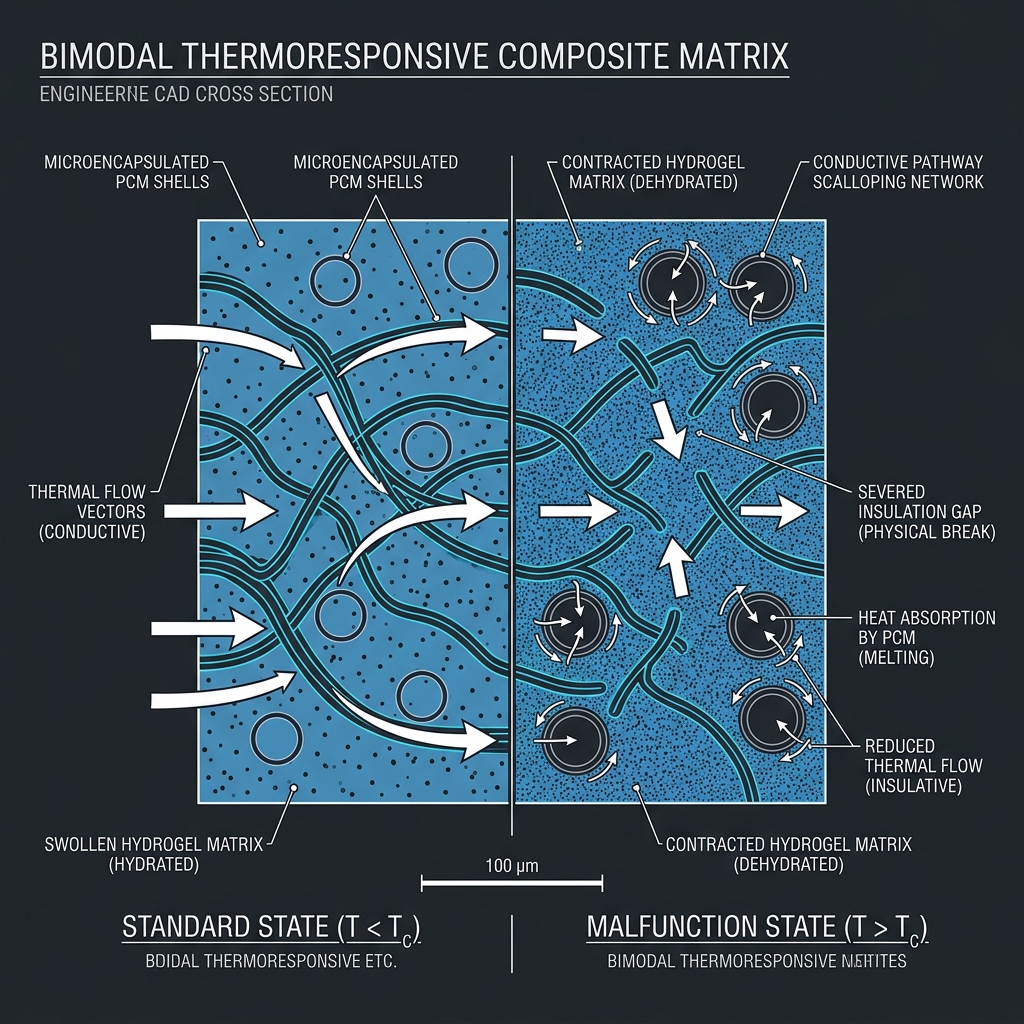
A specialized polymer backbone that physically swells and disrupts standard thermal pathways upon reaching a critical abuse temperature bounds, shifting from a heat dissipator to a heat blocker autonomously.
Conductive Percolation Base
By establishing an engineered network of metallic nano-structures, the matrix guarantees that normal, daily operational heat can be shed effectively, bypassing the "insulation oven" trap of basic aerogels.
Latent-Heat Buffering
Micro-encapsulated Phase Change Material physically embedded throughout the composite. During a rapidly escalating cell failure, the PCM layer forces aggressive latent heat absorption, delaying propagation velocities heavily.
Deconstruct the Threat Model →Engineering Blueprints
High-fidelity system modeling of the Patent 05 composite scaling from sub-micron to pack-level architectures.
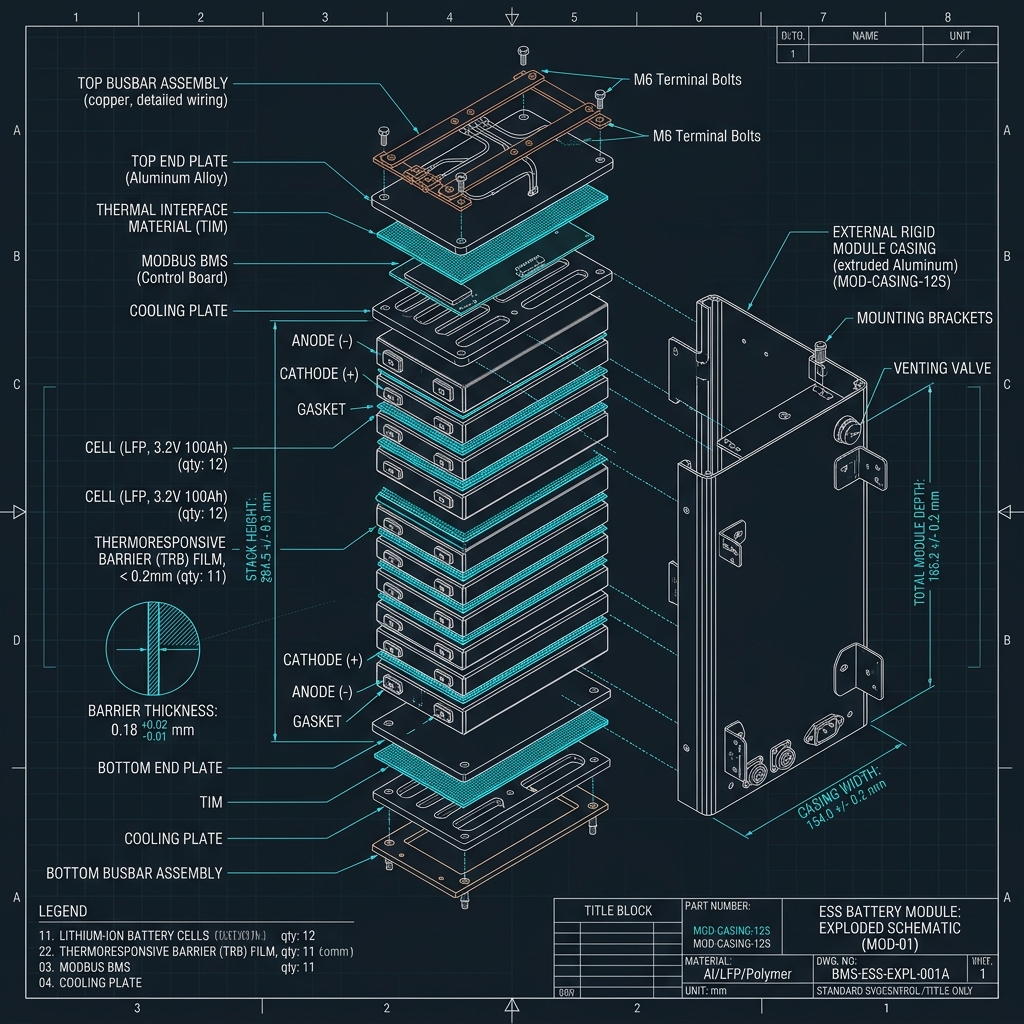
View A: Module Integration
Pack-scale cross-section detailing the exact placement of the composite barrier between closely packed, high-density cell stacks.
View B: Matrix Sub-Structure
Microscopic rendering of the dual-state composite geometry, detailing the conductive filler networks suspending the latent-heat microcapsules.
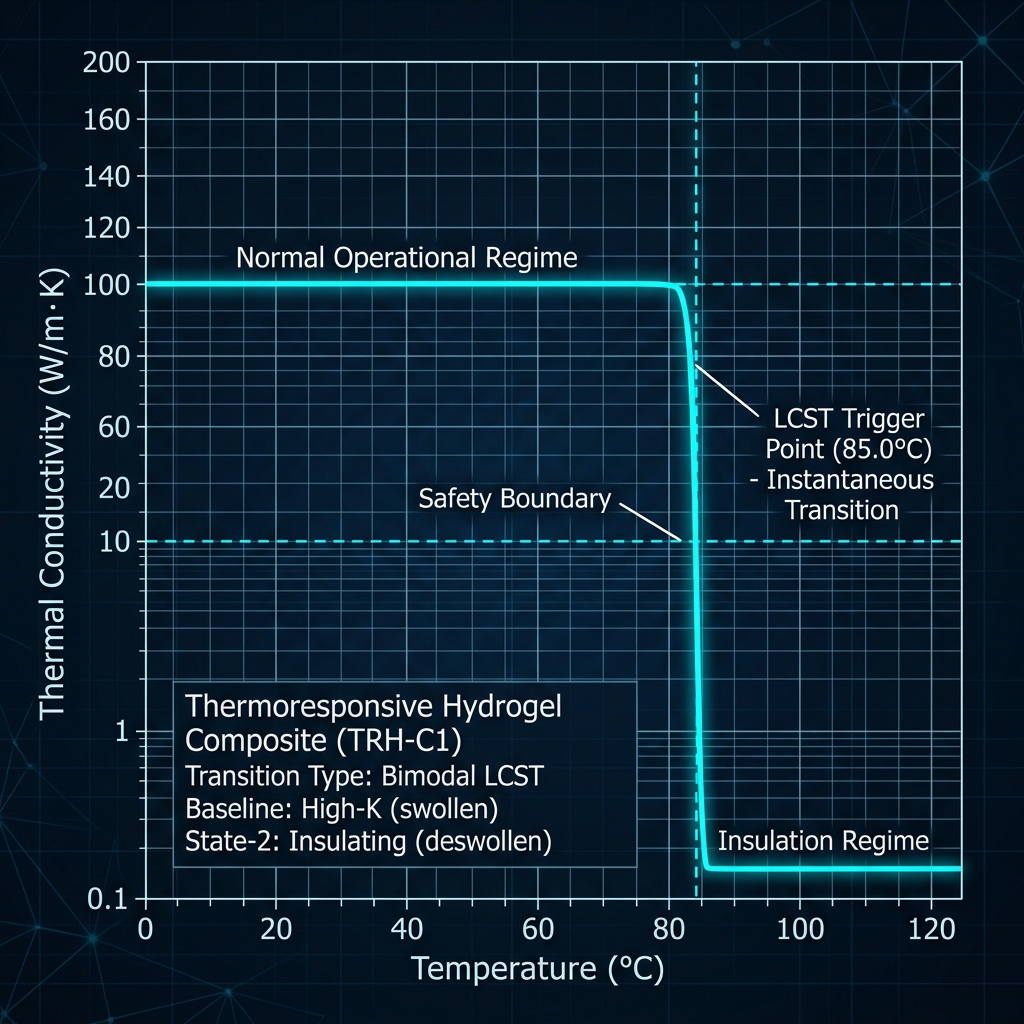
View C: Conductivity Transition Plot
Data mapping the critical switching ratio—proving the autonomous shutdown velocity of heat spreading the instant a programmed thermal threshold is breached.
Commercial Revenue & Value Engineering
In accordance with stringent IP valuation strategy, Diamond.Cool bypasses the crippling multi-year automotive homologation cycle to target the immediate, massive IP licensing opportunity in Stationary Battery deployments.
The Incumbent Problem
Existing safety paradigms use materials like static aerogels. While they isolate massive abuse failures, their inherently low conductivity cooks standard batteries during daily operational loads, destroying overall cycle lifetimes.
The Regulatory Moat
Operators are not buying safety barriers out of luxury; they are buying them to pass catastrophic propagation fire-tests required to keep massive energy storage systems legally operational in population centers.
Diamond.Cool Revenue Model (Stationary BESS Licensing)
While the ultimate goal includes electric vehicles, the immediate monetization path targets the booming Battery Energy Storage System (BESS) sector. BESS pack formats offer faster design-in cycles and immediate necessity for UL-grade propagation blockers, creating a high-margin IP licensing environment for DC-P05 chemistry scale-up.